In every first-time author’s life there comes a moment when someone – or a self-publishing platform’s interface – asks a very important question: what kind of paper would you like to use for your book’s interior?
This short article will cover all the basics – the colours, the weights, the pros and the cons of different paper types that you can expect to encounter in self-publishing.
Let’s start with…
Paper qualities – colour, weight, bulk, finish
Your paper choices in self-publishing will differ significantly depending on your printing method of choice. If you’ll be using a PoD platform (especially KDP), you’ll be limited to the range of papers they offer. Quite often, this will mean that you’ll be only able to choose between white or cream paper, without taking any of the other characteristics into consideration. If that’s your plan, and you’re looking purely for practical advice – skip this section and move to Paper in POD.
BUT, if you’re planning on using a regular printing company, you should know that paper comes in different:
- Weights
- Colours
- Bulk
- Finishes
Paper weight/grammage
Paper weight is usually measured in gsm – grams per square meter, or if your in the UK – in lbs.
This number will influence how thick and how transparent the pages of your book are. In general, the lower the weight, the thinner the paper (though if you really want to get into it, there are a few more factors to consider – we’ll cover them in a moment).
The typical grammage used to print books ranges from 70 to 130 gsm. Novels and other publications without illustrations will likely use 70-90 gsm paper. Books with images will use 100-130 gsm, or, if you’re planning on publishing an album or a photo-book, even higher weights. Talk to your designer and your printing company to determine what’s the best choice for your book.
Bulk
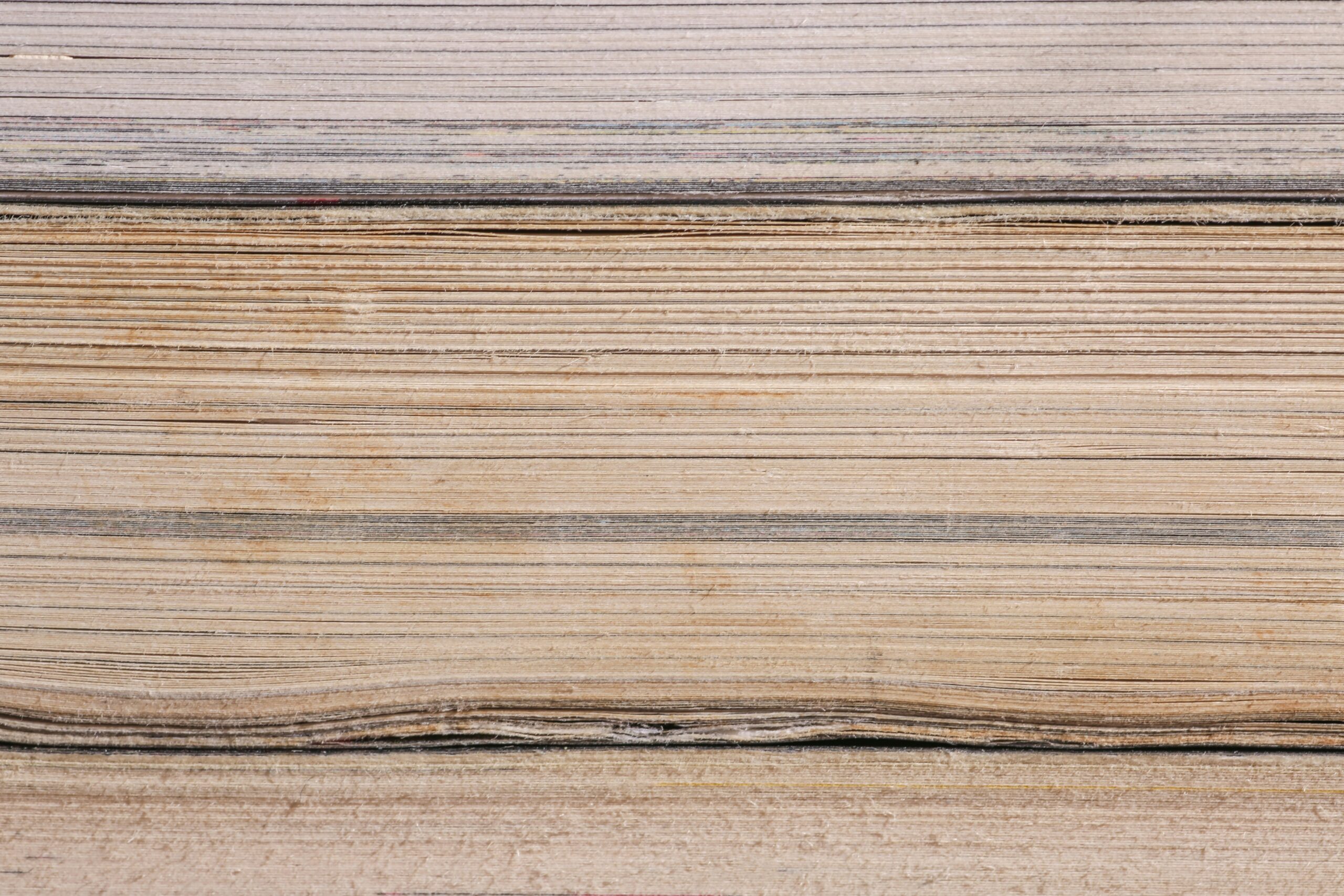
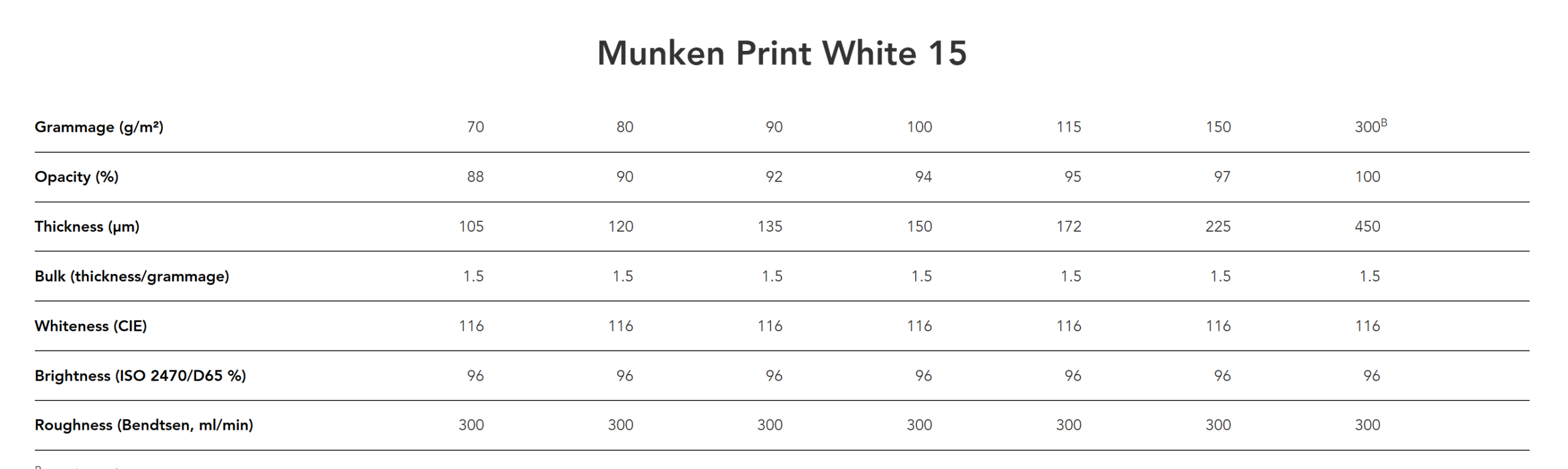
You might also encounter a term like bulk. Bulk is usually marked with a number in the paper name – for example Munken Print White 1.5 will have a bulk of 1.5, which will influence how thick, and so how transparent the paper is. This means that two paper types with the same grammage – for example 80 gsm – can have different thicknesses if they differ in bulk.
Paper colours
Book paper comes usually in two colours – cream or white.
Cream paper is most commonly used in novels and other publications without illustrations. Readers find less contrast between letters and their background more comfortable when dealing with long texts (yes, this is scientifically backed – your eyes don’t get tired as quickly).
White paper is more suited for books with images, especially colorful ones – they tend to look better and sharper on a colorless background.
Buuuut… does “white” and “cream” always mean the same?
Ah, if it only were that easy.
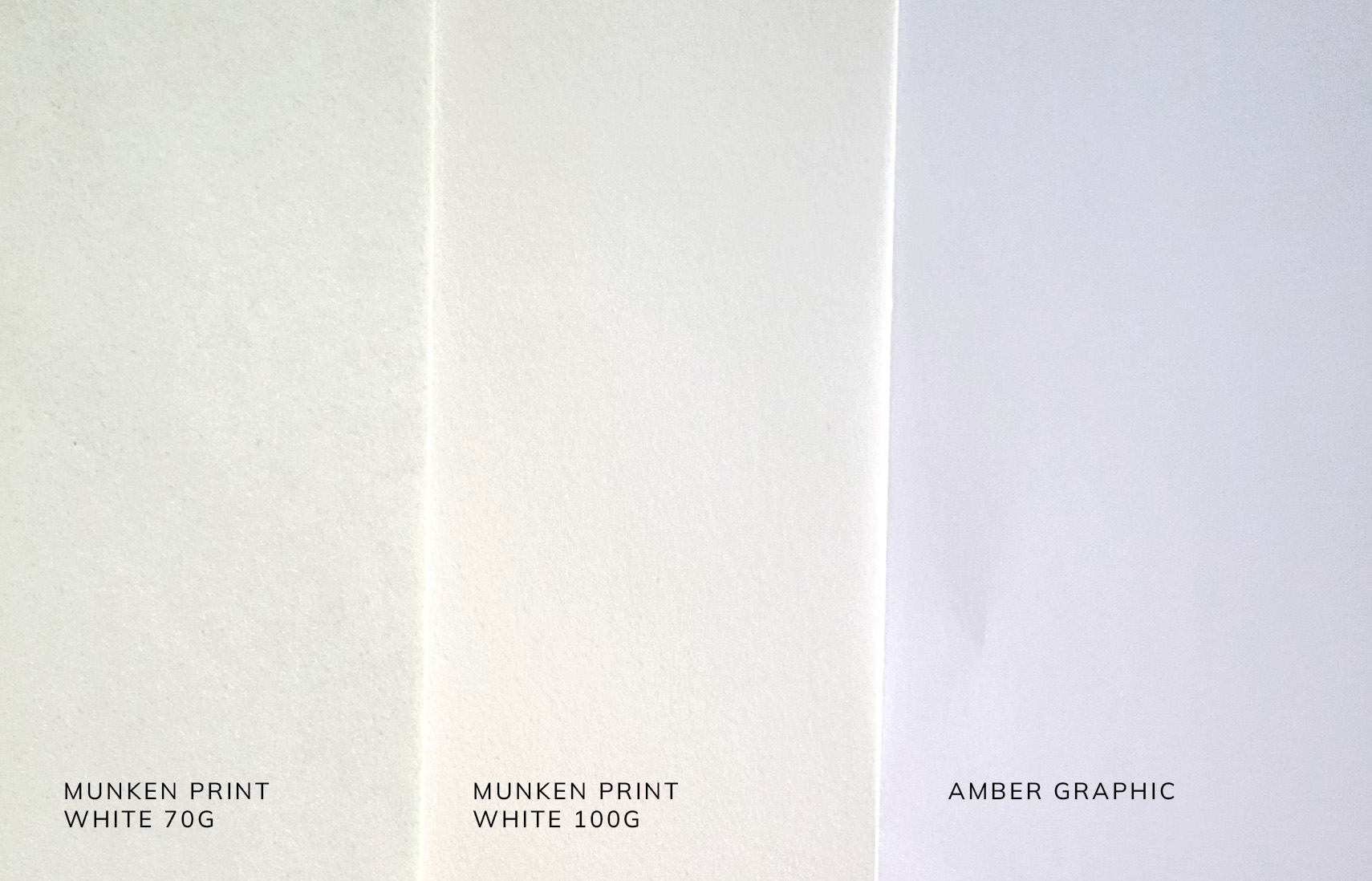
If you’re printing via a regular printing company, you can check the whiteness factor of the paper you chose. Papers that have “white” in the name can actually be off-white or even light cream. For example – Munken Print White that I mentioned earlier, has a whiteness of 116, and is actually a very light cream colour. An example of a popular white white paper is Amber Graphic, with a whiteness of 146.
How to check these parameters? Google “paper name + technical specifications” and you’ll find all the information you need.
Paper finish
Another important distinction is paper finish.
To start with, you can have:
- Matte paper – commonly used for regular publications, like novels or non-fiction books
- Glossy paper – often used for photo books, coffee table books, etc.
- Silk paper – has a finish between glossy and matte; it’s usually thicker than regular matte paper, and works great with illustrations.
But! That’s not all. Another subcategory is coated vs uncoated:
- Coated paper – perfect for heavily illustrated books which need vibrant colours and sharp edges.
- Uncoated paper – better when you’re publishing a novel without colorful illustrations.
Popular book paper manufacturers
If you’re interested in going to the source, check out some of the most popular paper manufacturers:
- Arctic Paper, which manufactures for example Munken, G-Print, and Amber Graphic
- Antalis, distributing Ecco Book
- Panta, distributing Alto paper
- Holmen, distributing Holmen Book
Tip for designers: Sometimes, it’s really useful to have samples of the most popular papers at home – even if you work remotely. Some manufacturers offer sample books at a low cost, or even for free.
Certificates
If you’d like to make sure that your book is as environmentally-friendly as possible, choose papers that have certificates that verify that the paper originates from responsible forest management. Some names to look out for are:
- PEFC Certificate
- FSC Certificate
- European EcoLabel
You can read more about various certificates here: Europapier.
Paper in Print-On-Demand
PoD platforms such as KDP usually have a very limited amount of papers to choose from.
Let’s take a closer look:
- KDP offers white or cream paper. That’s it. They don’t disclose the exact weight in gsm, but it’s usually around 70-80gsm.
- IngramSpark gives you a slightly wider choice. They offer groundwood paper at 56 gsm (very cheap, but also very, very thin), cream paper at around 74 gsm, and white paper in 74 and 104 gsm.
- BoD (available in some European countries, like Norway, Sweden or Germany) offers the widest choice – they offer both white and cream 80 and 90 gsm papers, matte white paper in 120gsm, and glossy white paper in 130 gsm.
Remember: choose cream paper for novels and non-fiction with no colourful illustrations, and white paper for books that have images, charts, graphs, etc. in colour.
That’s it!
I hope you found this short article useful – let me know if you think it’s lacking something, or if you have an additional question.
I’m always up for a chat – get in touch via marta@martadec.eu.